" height="195.9904504260836px" id="HbDpaC_wM" transform="translate(0.326 63.785)" width="224.63895821850585px"/><path d="M 74.563 0 L 109.183 0 C 131.6 0 149.772 18.172 149.772 40.59 L 149.772 64.187 L 94.857 64.187 C 83.649 64.187 74.563 55.101 74.563 43.893 Z M 224.981 128.375 L 190.361 128.375 C 167.944 128.375 149.772 110.202 149.772 87.785 L 149.772 64.189 L 204.687 64.189 C 215.895 64.189 224.981 73.275 224.981 84.483 L 224.981 128.376 Z M 0.001 195.155 L 34.621 195.155 C 57.038 195.155 75.211 213.328 75.211 235.745 L 75.211 259.343 L 20.295 259.343 C 9.086 259.343 0 250.256 0 239.048 L 0 195.155 Z" fill="rgb(0, 0, 0)" height="259.34299877929686px" id="atyzzqCWy" transform="translate(0.006 0)" width="224.98100317382813px"/><path d="M 75.21 304.788 L 40.59 304.788 C 18.173 304.788 0 286.616 0 264.199 L 0 240.601 L 54.915 240.601 C 66.123 240.601 75.21 249.687 75.21 260.896 Z M 272.281 281.515 C 252.367 281.515 235.169 277.377 220.686 269.101 C 206.289 260.738 195.211 248.928 187.452 233.669 C 179.693 218.324 175.814 200.263 175.814 179.487 C 175.814 159.055 179.693 141.124 187.452 125.693 C 195.297 110.175 206.246 98.106 220.298 89.485 C 234.35 80.778 250.859 76.425 269.825 76.425 C 282.066 76.425 293.618 78.407 304.48 82.373 C 315.429 86.252 325.084 92.287 333.447 100.476 C 341.895 108.666 348.533 119.098 353.361 131.77 C 358.188 144.357 360.602 159.357 360.602 176.771 L 360.602 191.125 L 197.797 191.125 L 197.797 159.573 L 315.731 159.573 C 315.644 150.607 313.705 142.633 309.912 135.65 C 306.118 128.581 300.817 123.02 294.006 118.968 C 287.282 114.916 279.437 112.891 270.471 112.891 C 260.902 112.891 252.497 115.218 245.255 119.873 C 238.013 124.443 232.367 130.477 228.315 137.977 C 224.349 145.391 222.324 153.538 222.237 162.417 L 222.237 189.961 C 222.237 201.513 224.349 211.427 228.574 219.703 C 232.798 227.893 238.703 234.186 246.29 238.583 C 253.876 242.893 262.755 245.049 272.928 245.049 C 279.739 245.049 285.902 244.1 291.42 242.204 C 296.937 240.221 301.722 237.333 305.774 233.54 C 309.825 229.746 312.886 225.048 314.955 219.445 L 358.663 224.358 C 355.904 235.91 350.645 245.997 342.886 254.618 C 335.214 263.152 325.386 269.79 313.403 274.532 C 301.42 279.187 287.713 281.515 272.281 281.515 Z M 400.204 277.635 L 400.204 79.011 L 447.016 79.011 L 447.016 277.635 Z M 423.739 50.82 C 416.325 50.82 409.946 48.363 404.601 43.45 C 399.256 38.45 396.584 32.458 396.584 25.475 C 396.584 18.405 399.256 12.415 404.601 7.5 C 409.946 2.5 416.325 0 423.739 0 C 431.24 0 437.619 2.5 442.878 7.5 C 448.223 12.414 450.895 18.406 450.895 25.475 C 450.895 32.458 448.223 38.449 442.878 43.449 C 437.619 48.363 431.24 50.82 423.739 50.82 Z M 595.758 79.01 L 595.758 115.218 L 478.342 115.218 L 478.342 79.01 Z M 507.696 277.635 L 507.696 60.26 C 507.696 46.898 510.455 35.777 515.972 26.897 C 521.576 18.017 529.076 11.38 538.472 6.983 C 547.869 2.587 558.3 0.388 569.766 0.388 C 577.87 0.388 585.068 1.035 591.361 2.328 C 597.655 3.621 602.31 4.785 605.327 5.819 L 596.017 42.027 C 594.034 41.423 591.534 40.82 588.517 40.217 C 585.499 39.527 582.137 39.182 578.43 39.182 C 569.723 39.182 563.559 41.294 559.938 45.518 C 556.404 49.656 554.637 55.605 554.637 63.364 L 554.637 277.635 Z M 632.418 277.635 L 632.418 79.011 L 679.23 79.011 L 679.23 277.635 Z M 655.953 50.82 C 648.539 50.82 642.16 48.363 636.815 43.45 C 631.47 38.45 628.798 32.458 628.798 25.475 C 628.798 18.405 631.47 12.415 636.815 7.5 C 642.16 2.5 648.539 0 655.953 0 C 663.454 0 669.833 2.5 675.092 7.5 C 680.437 12.414 683.109 18.406 683.109 25.475 C 683.109 32.458 680.437 38.449 675.092 43.449 C 669.833 48.363 663.454 50.82 655.953 50.82 Z M 814.006 281.515 C 794.609 281.515 777.799 277.247 763.574 268.713 C 749.35 260.178 738.315 248.238 730.47 232.893 C 722.711 217.548 718.832 199.617 718.832 179.099 C 718.832 158.581 722.711 140.607 730.47 125.175 C 738.315 109.744 749.35 97.761 763.574 89.226 C 777.799 80.692 794.609 76.424 814.006 76.424 C 833.403 76.424 850.214 80.692 864.438 89.226 C 878.663 97.761 889.654 109.744 897.413 125.175 C 905.258 140.607 909.181 158.581 909.181 179.099 C 909.181 199.617 905.258 217.548 897.413 232.893 C 889.654 248.238 878.663 260.178 864.438 268.713 C 850.214 277.247 833.403 281.515 814.006 281.515 Z M 814.265 244.014 C 824.782 244.014 833.576 241.126 840.645 235.35 C 847.714 229.488 852.973 221.643 856.421 211.815 C 859.956 201.987 861.723 191.039 861.723 178.97 C 861.723 166.814 859.956 155.822 856.421 145.995 C 852.973 136.081 847.714 128.193 840.645 122.33 C 833.576 116.468 824.782 113.537 814.265 113.537 C 803.489 113.537 794.523 116.468 787.368 122.33 C 780.299 128.193 774.997 136.081 771.462 145.995 C 768.014 155.822 766.29 166.814 766.29 178.97 C 766.29 191.039 768.014 201.987 771.462 211.815 C 774.997 221.643 780.299 229.488 787.368 235.35 C 794.523 241.126 803.489 244.014 814.265 244.014 Z" fill="rgb(0, 0, 0)" height="304.7879979248047px" id="PaIOkTkbq" transform="translate(75.216 18.741)" width="909.1809702148439px"/></g></svg>)
A regulated medical category with no access to standard payment tools is a conversion problem most teams walk away from. Shopify Payments blocked. Subscription tools incompatible. Manual recurring plan management. In a market where patients are making health decisions, a confused checkout isn't cart abandonment. It's a patient who needed treatment walking away because the system felt unreliable.
Trim operates under GPhC registration, UK prescriber oversight, and clinical compliance requirements that block the default e-commerce stack. The platform had disconnected payment flows, no automated dosage progression tracking, and high support volume from patients lost between checkout and their treatment plan.
The design problems ran deeper than infrastructure. Visual hierarchy across the treatment pages gave equal weight to every element. Clinical disclaimers competed with CTAs. Dosage information sat at the same size and weight as promotional copy. Nothing guided the eye toward the next step. On mobile, where most patients browse, the layout collapsed into a wall of equally-weighted text blocks with no clear reading path.
The competitive context raised the stakes. 76 pharmacies now offer GLP-1 medications online. The medications are identical. The prices are similar. Every competitor site follows the same visual pattern: clinical white backgrounds, stock photography, dense paragraph-heavy layouts with no hierarchy between sections. The opportunity was in the design layer. A clear visual system, deliberate typographic hierarchy, and conversion-sequenced layouts could separate Trim from 75 near-identical competitors without sacrificing a gram of medical credibility.
The scope confirmed this wasn't a surface-level fix. Every patient touchpoint from first click through ongoing treatment management needed to hold the same standard: clinical authority and commercial warmth, simultaneously, across desktop and mobile, without losing either side.
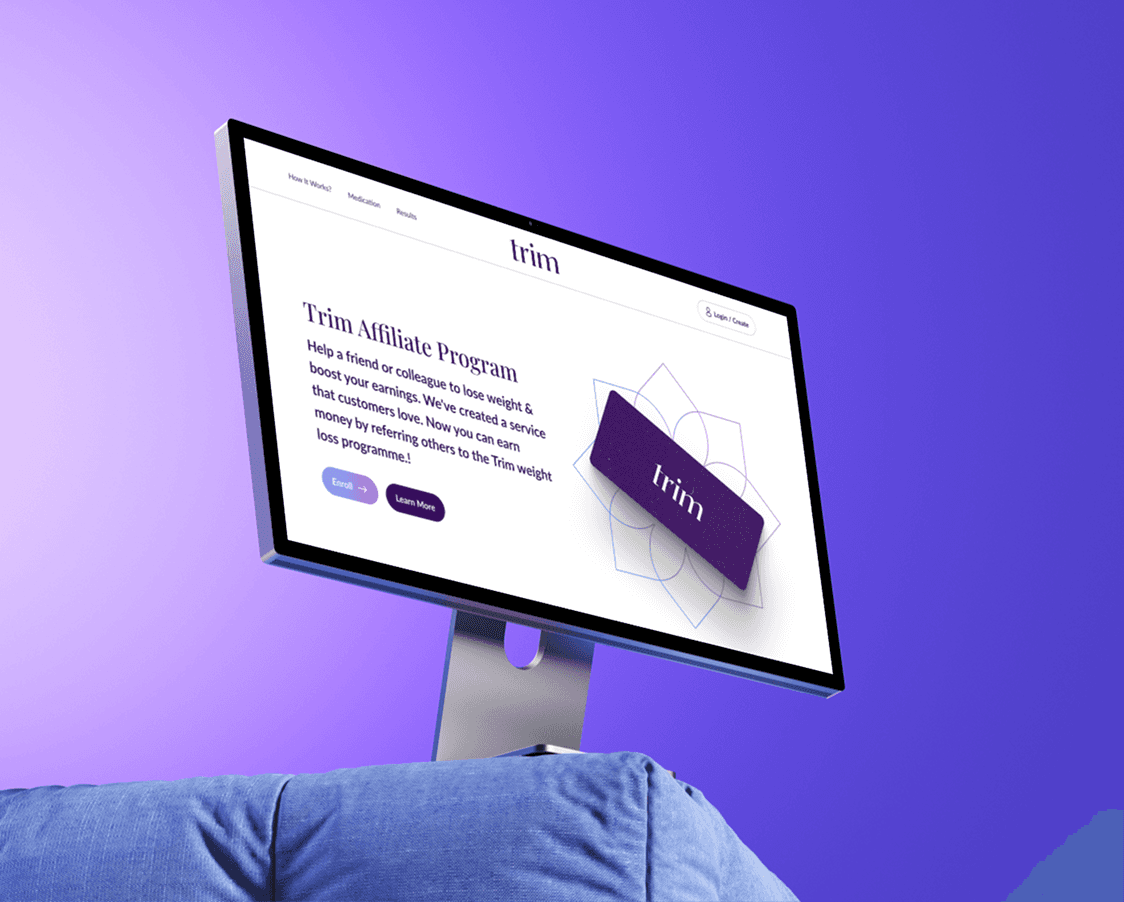
Architecture before aesthetics. Full sitemaps, user flow mapping, and subscription flows mapped before a single screen was built. The brief never changed: make a medically complex subscription feel like buying anything else online, across every touchpoint from homepage to app.
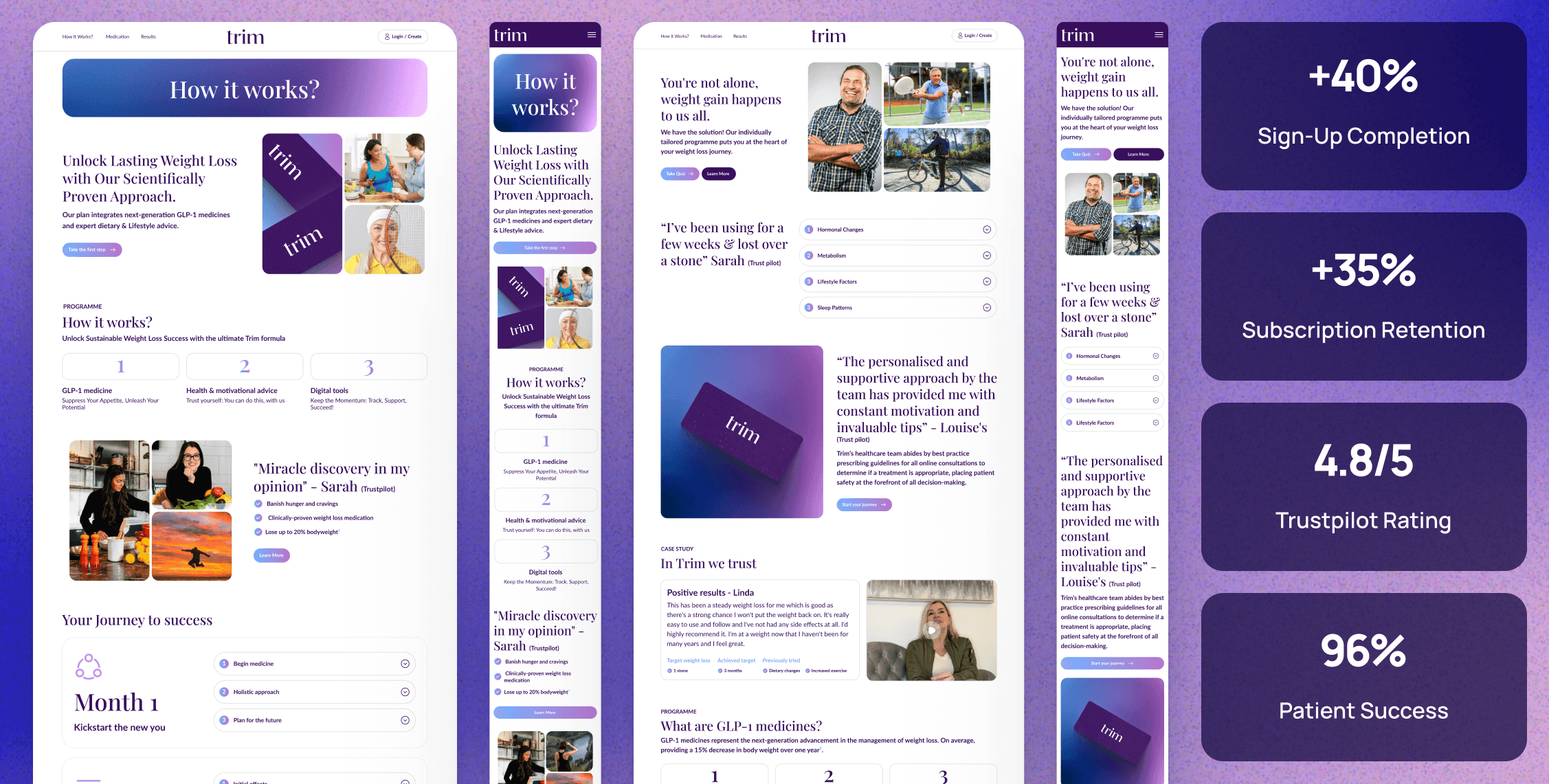
The homepage established the visual hierarchy system that carried across every other page. Clinical proof from 200 patients (91% hunger reduction, 96% weight loss at six months, 84% mild side effects only) sat in the first scroll at headline weight. Real patient names underneath at a smaller, lighter secondary level. Emma lost 20kg. Amber lost 75lbs. Trustpilot rating anchored next to the hero headline. The hierarchy was deliberate: proof elements large and high-contrast, supporting clinical detail smaller and softer, CTAs isolated with generous spacing so nothing competed for attention at the decision point.
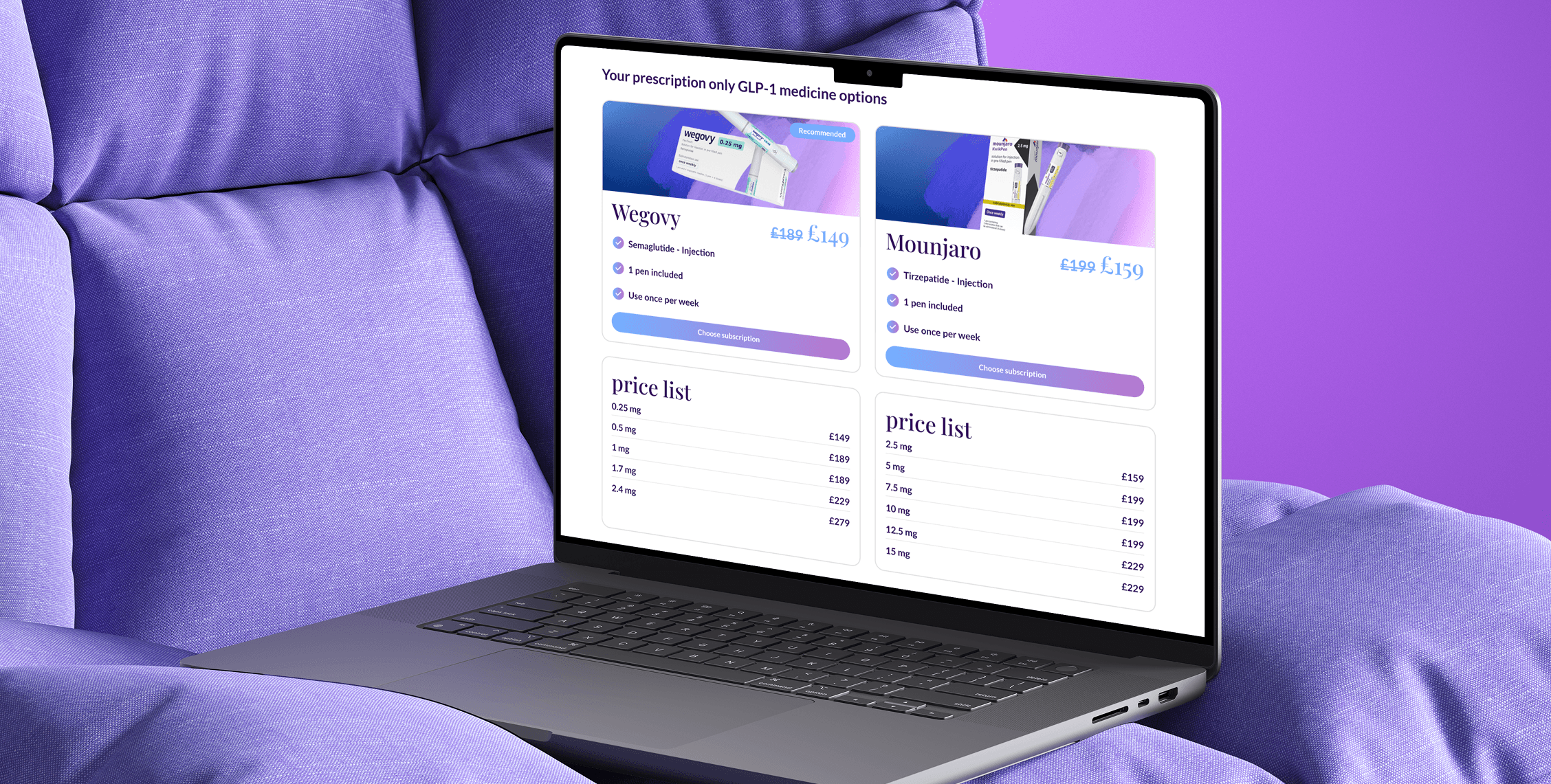
The colour system solved the credibility problem visually. Gradient purples separated Trim from the clinical-white pattern every competitor defaults to. Warm enough to feel like a DTC brand. Controlled enough to feel medically serious. The palette ran through every touchpoint: homepage, treatment pages, quiz, subscription dashboard, app. One visual language. No context switching between screens.
The consultation quiz was built as a 5-step form flow. Each step used a single-column constrained layout (no wider than 500px) with one question per view. Progress indicators kept momentum visible. Labels were de-emphasised, input fields prominent. The 3-step approval visual (Consultation, Treatment Plan, Next-Day Delivery) collapsed medical subscription complexity into one scannable left-to-right sequence using size and weight to show progression, not just numbering.
The blocked payment stack was invisible to patients. The checkout carried the same typography, colour system, and spacing scale through every step. No visual break between eligibility and payment. Patients moved through without registering a handoff.
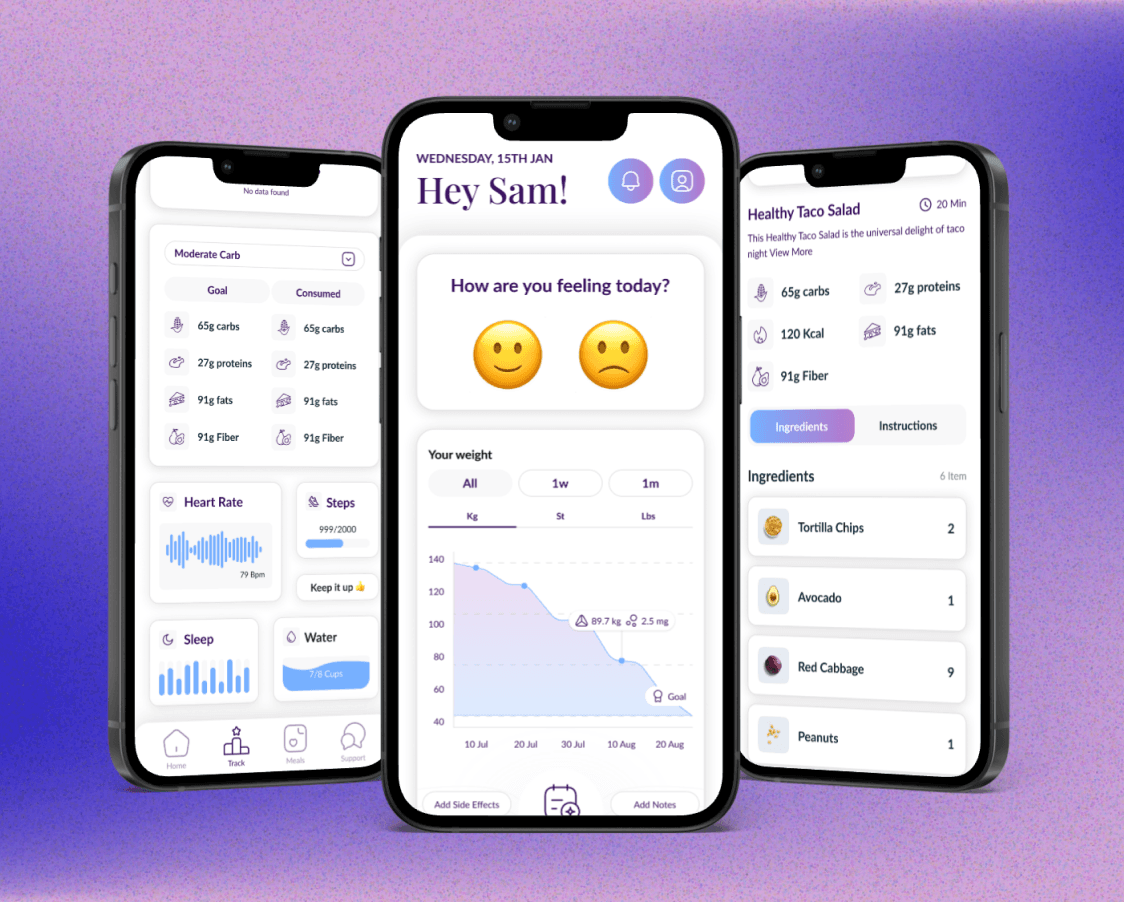
The companion app extended the visual system past checkout. Treatment tracking, dosage reminders, plan management, all using the same typographic hierarchy, colour palette, and spacing logic from the website. The app wasn't a separate product bolted on. It was the same design system rendered on a smaller screen. Marketing landing pages for paid acquisition stripped the main site to a single conversion objective: proof, promise, CTA. Same trust architecture, tighter layout, no navigation distractions.
Full website, marketing landing pages, consultation flow, subscription system, and companion app. Six weeks. Every screen held the same standard: clinical trust and commercial conversion, simultaneously.
Six weeks from kickoff to launch-ready. Every deliverable shipped within the window.
Retention increased 35% after the subscription interface was restructured around treatment stages rather than generic billing cycles. Visual hierarchy showed patients exactly where they were in their dosage plan. Large type for current stage, muted smaller type for upcoming stages, clear colour differentiation between active and completed cycles. Cancellations dropped because the interface made the plan legible at a glance.
Sign-up completion increased 40% after the checkout flow was rebuilt with a single-column layout, consistent brand typography, and no visual break between the eligibility step and payment. One input per row, generous vertical spacing between fields, labels de-emphasised so patient attention stayed on the action, not the instruction.
Support volume fell because the interface surfaced the information patients used to call about. Dosage progression, plan changes, next steps, all visible inside the subscription UI with clear typographic hierarchy between primary information (current dose, next adjustment date) and secondary detail (clinical notes, prescriber information).
The app closed the retention loop. Post-purchase, patients tracked their treatment inside the same visual system they bought from. Same gradient palette, same type scale, same spacing logic. No context switch between web and mobile. The Trustpilot rating reflected it: 4.8 from 427 reviews in a market where the medication is identical across 76 competitors. The design system became the only moat.